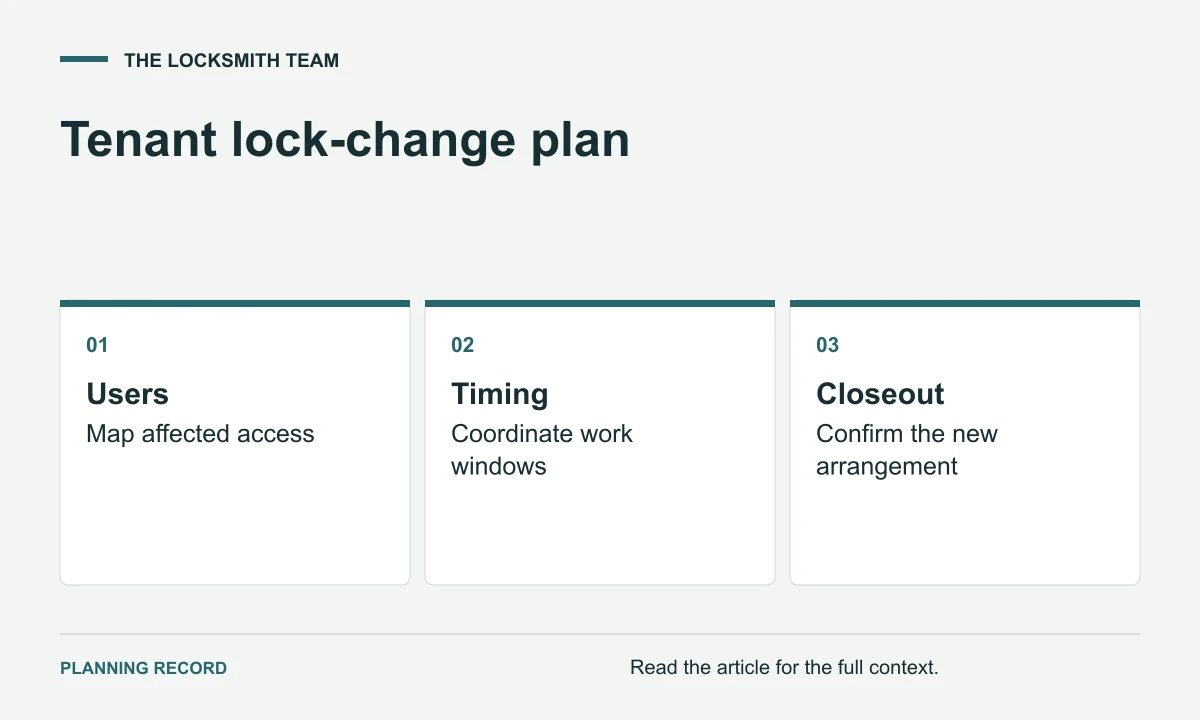
A commercial lock change should define how each authorized tenant retains necessary access during the work. Start with the affected openings and property approval, then agree on the sequence. One appointment time does not explain the entire changeover.
Map the affected users
List tenants, staff, service contractors and relevant shared entrances. Confirm who approves each opening and who can attend. Keep the work boundary clear so a tenant's request does not expand into unauthorized common-door changes.
Discuss temporary access and how users learn when the change takes effect. Avoid distributing new keys through informal unattended exchanges or publishing credentials in a general notice.
Close the changeover
Agree who receives new keys, reconciles issue records and confirms ordinary door operation. Record any old access that remains valid and any unresolved item.
Ask the provider to explain system compatibility and dependencies before approving the scope. A change to one cylinder can require consideration of an existing key arrangement rather than a stand-alone part choice.
Review commercial locksmith services and contact The Locksmith Team with the tenant access plan and authorized building contact.